This guide is independent travel-planning advice, not an offer of a confirmed tour, departure, fare or reservation.
Decide what kind of central Vietnam trip you want
Central Vietnam includes distinct experiences: Da Nang is a coastal city and transport hub, Hoi An is a lived-in historic trading town, Hue has imperial-era monuments and the Phong Nha area is known for limestone caves and forests. They do not all fit comfortably into one busy day. Choose one or two bases according to what you most want to understand.
If you have only a few days, concentrate on a compact Da Nang–Hoi An or Hue-focused plan. Adding Phong Nha means allowing for longer transfers, accommodation and excursion schedules. Keep one uncommitted period for rest, weather changes and places that reward more than a short photograph.
Phong Nha: choose caves according to the conditions
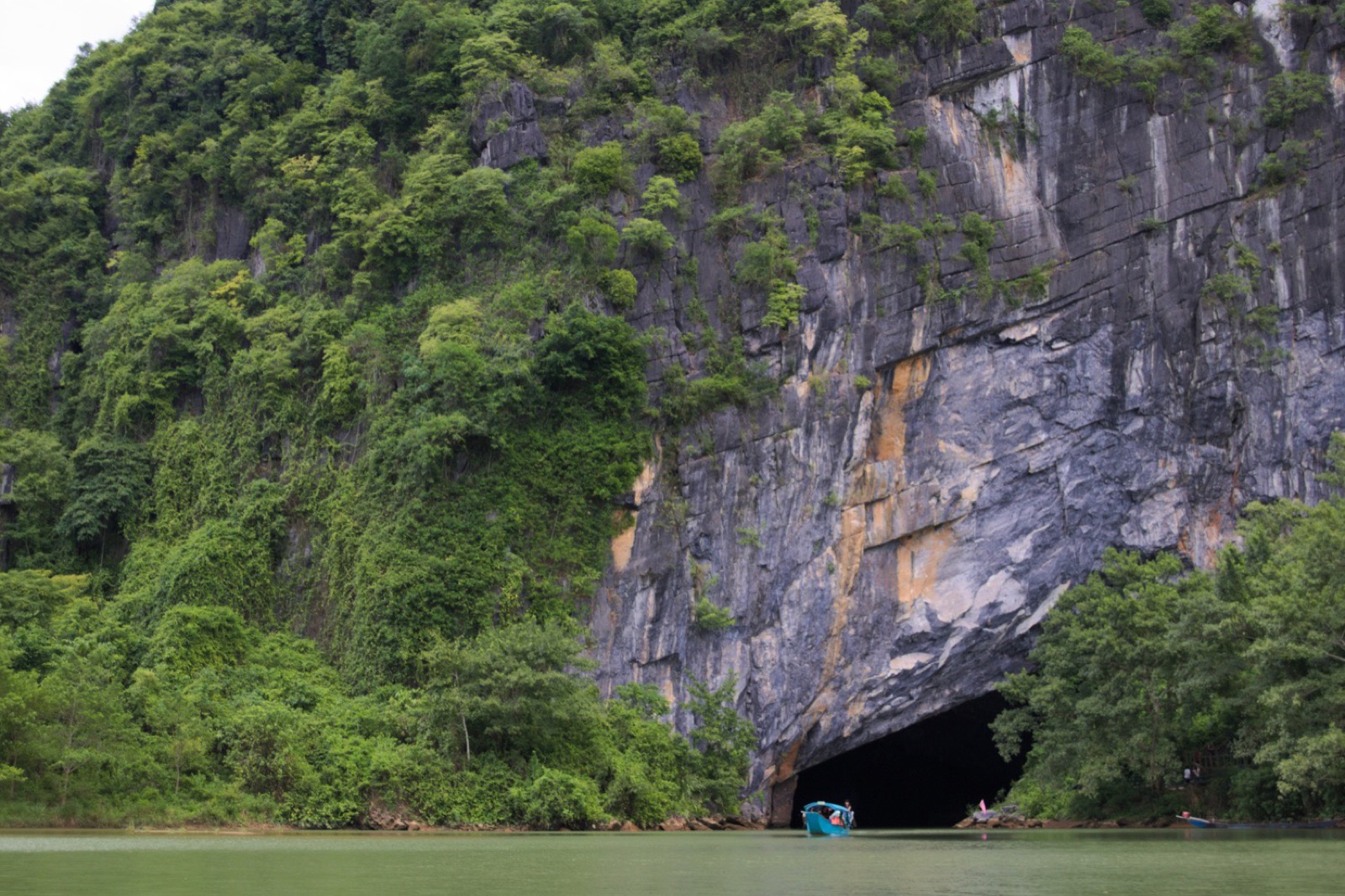
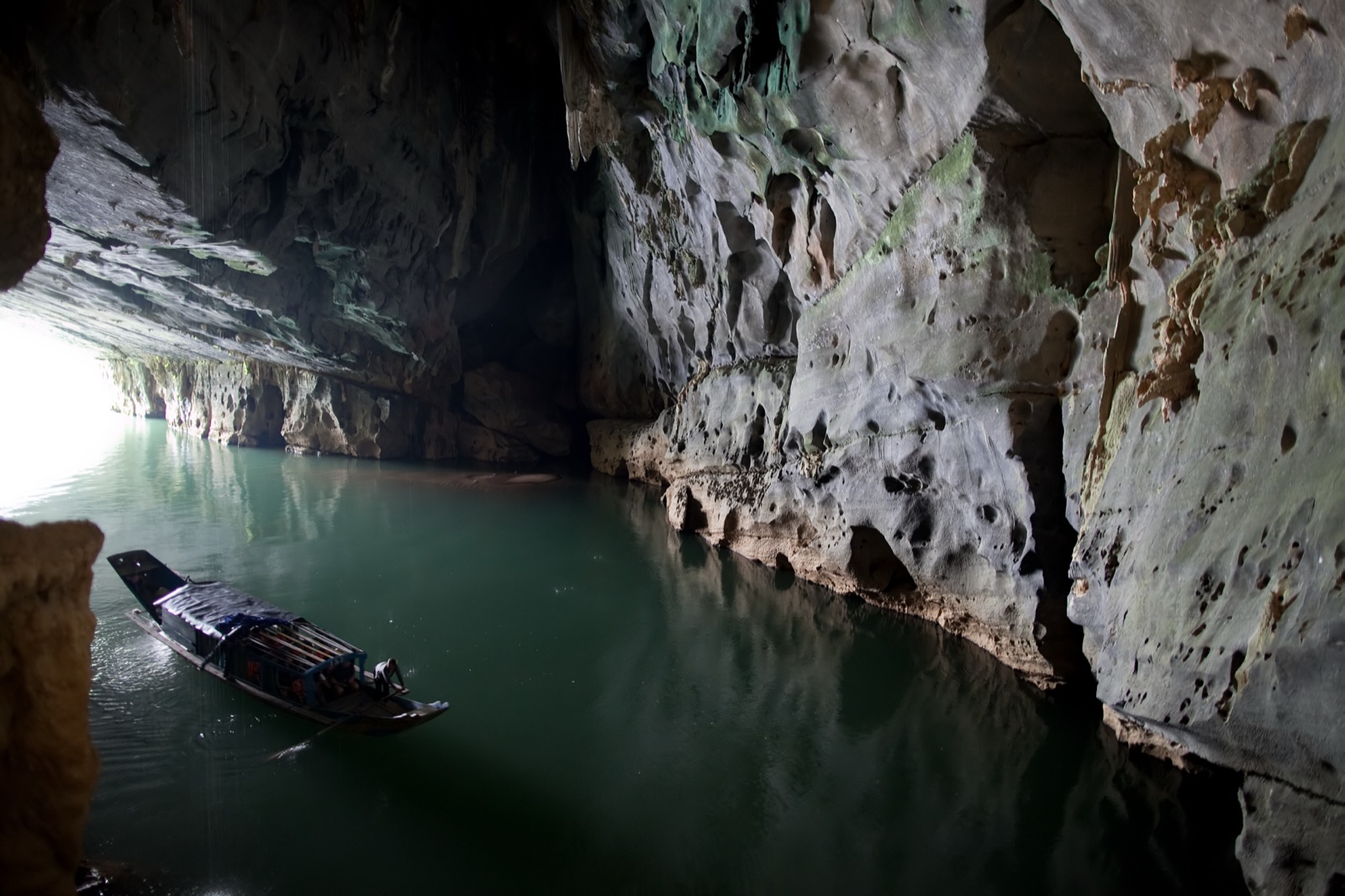
The UNESCO-listed Phong Nha–Ke Bang landscape is an extensive karst and forest system, not a single cave entrance. Excursions vary widely in duration, physical demands and access requirements. A short public cave visit and a specialist adventure expedition need different planning, equipment and operator checks.
Water levels, heavy rain and conservation rules can affect cave access. Use permitted routes and qualified providers for technical activities, and never treat a past traveller's itinerary as proof a cave is currently open. Avoid touching formations or entering restricted areas.
Hue: understand a former imperial capital
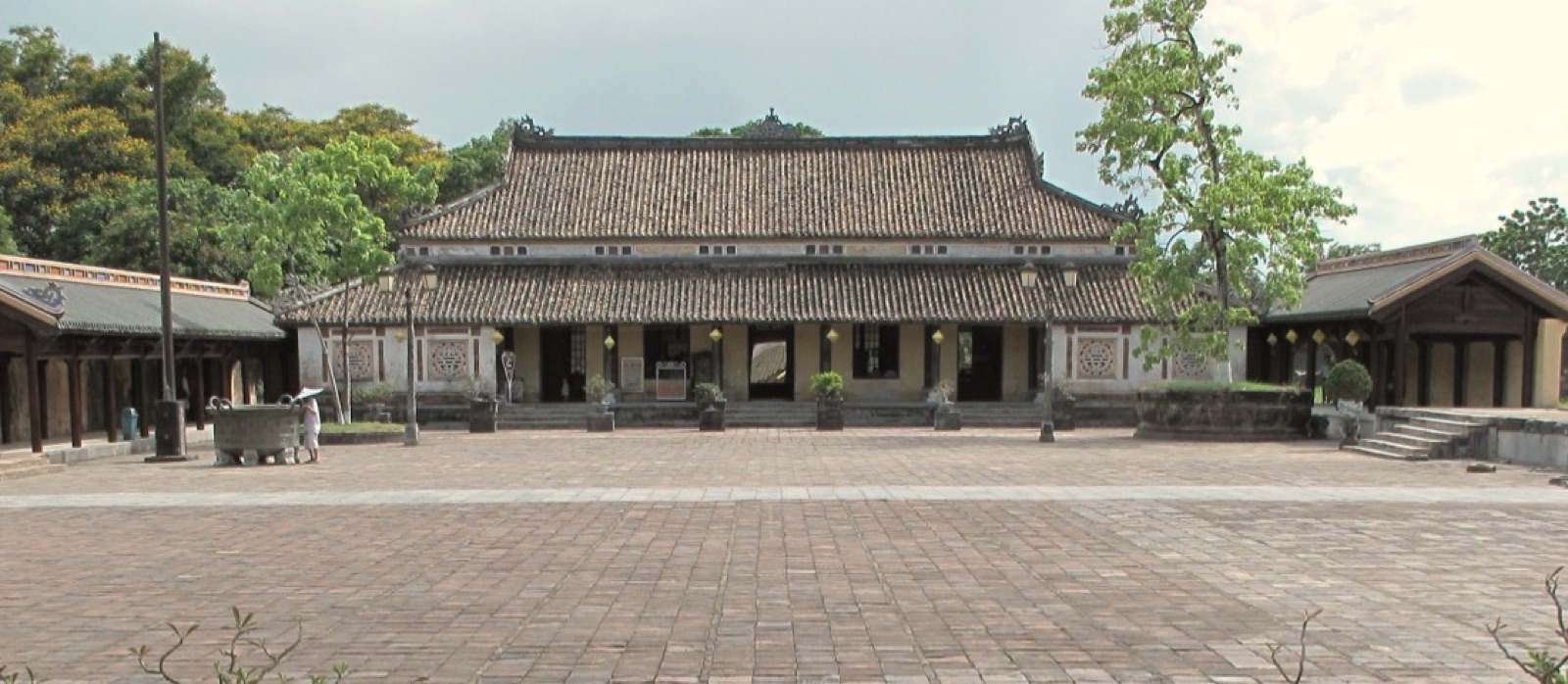
UNESCO describes the Complex of Hue Monuments as a former political and cultural centre associated with the Nguyen dynasty. The Citadel and Imperial City are only part of a wider landscape that includes royal tombs, temples and the Perfume River. Rather than visiting every monument in a hurry, select a few and read their historical context.
Some monuments have limited shade, uneven surfaces and distinct access or ticket arrangements. Check official visiting information before departure. A city visit may be more comfortable when paired with a slower riverfront or food-focused period rather than multiple long transfers in the same afternoon.
Hoi An: look beyond lantern photographs
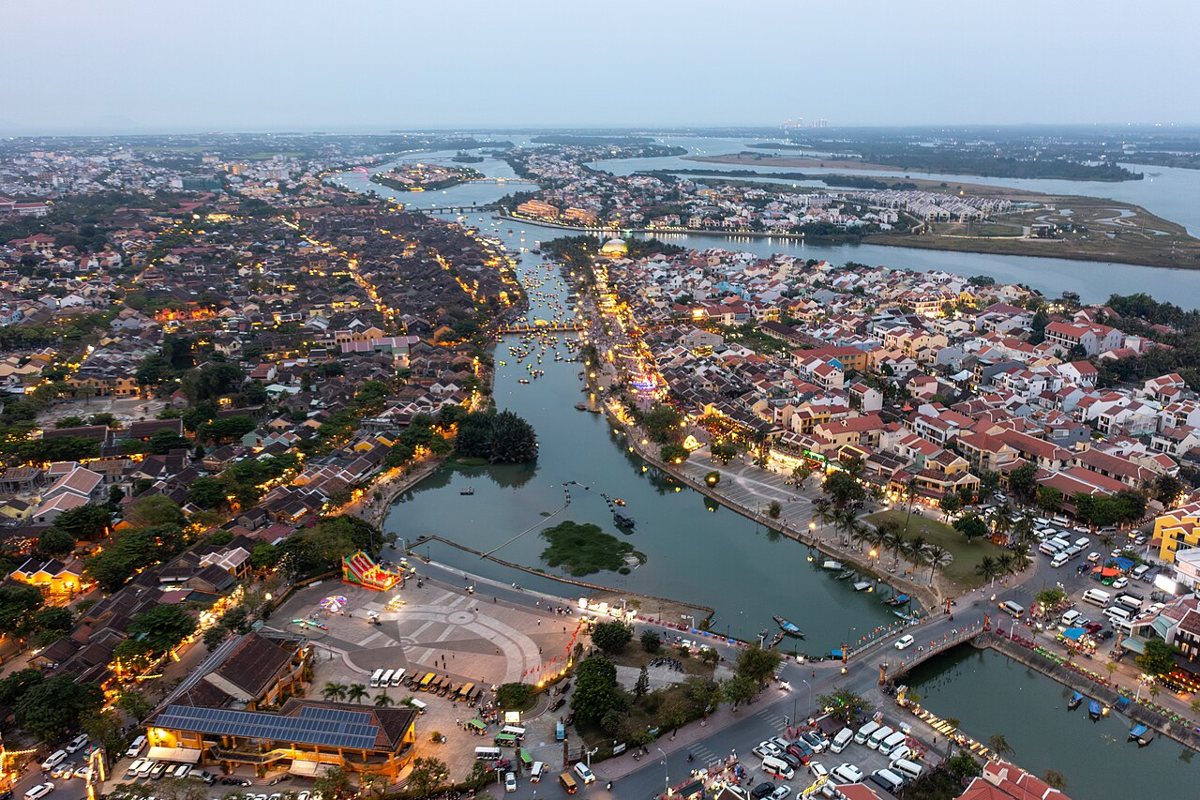
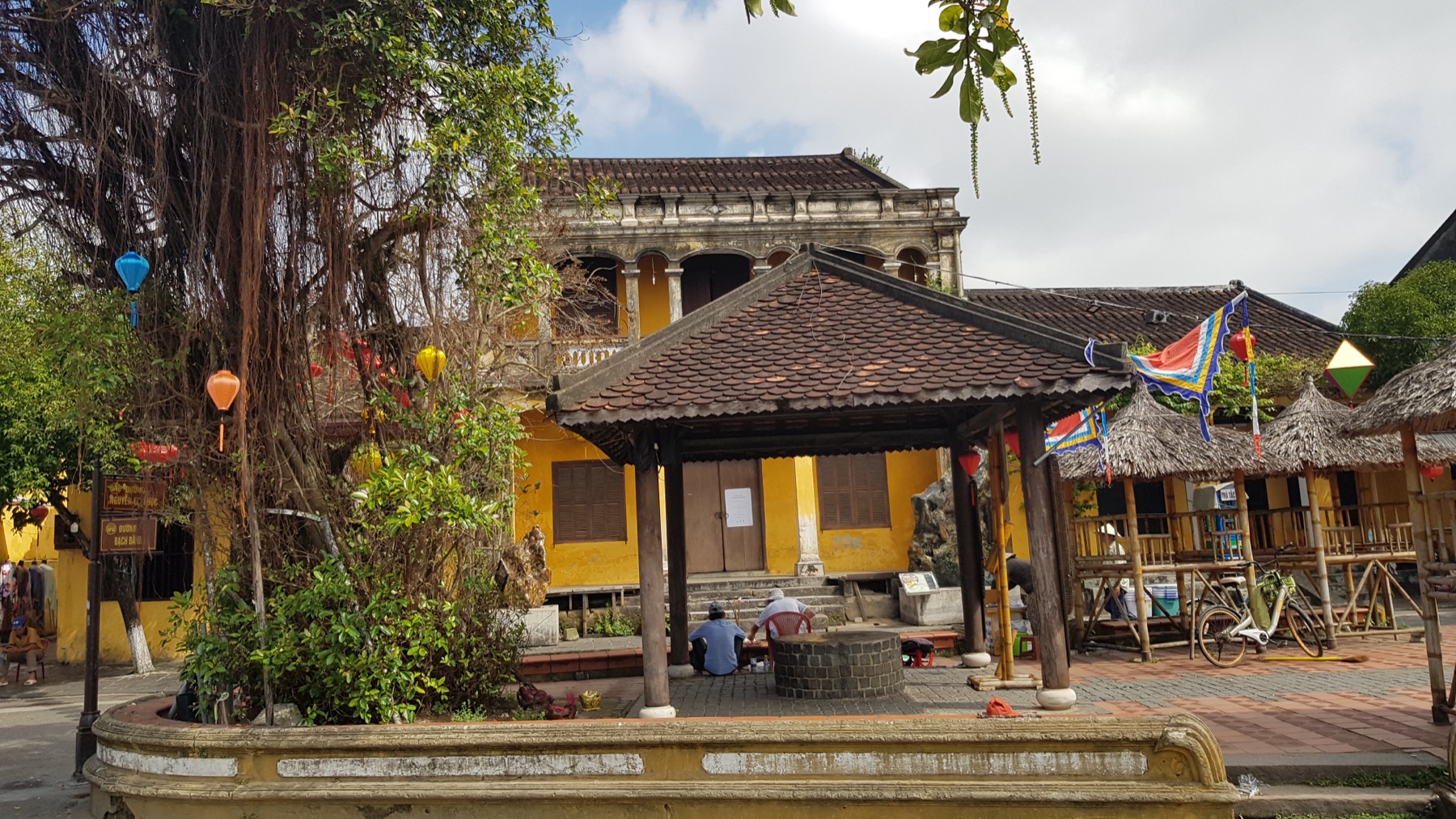
UNESCO identifies Hoi An Ancient Town as a particularly well-preserved trading port shaped by regional and international exchange between the fifteenth and nineteenth centuries. Its shopfronts, courtyards, religious buildings and street layout explain why the town deserves a thoughtful walk rather than a sequence of photo stops.
Start with a manageable street circuit, choose a few sites that interest you and follow current ticket and pedestrian-area instructions. Residents still live and work here: ask before photographing people or private interiors, avoid blocking doorways, and leave room for a local meal or a quieter return walk. Heavy rain can affect riverside routes.
When to go and what to check before moving
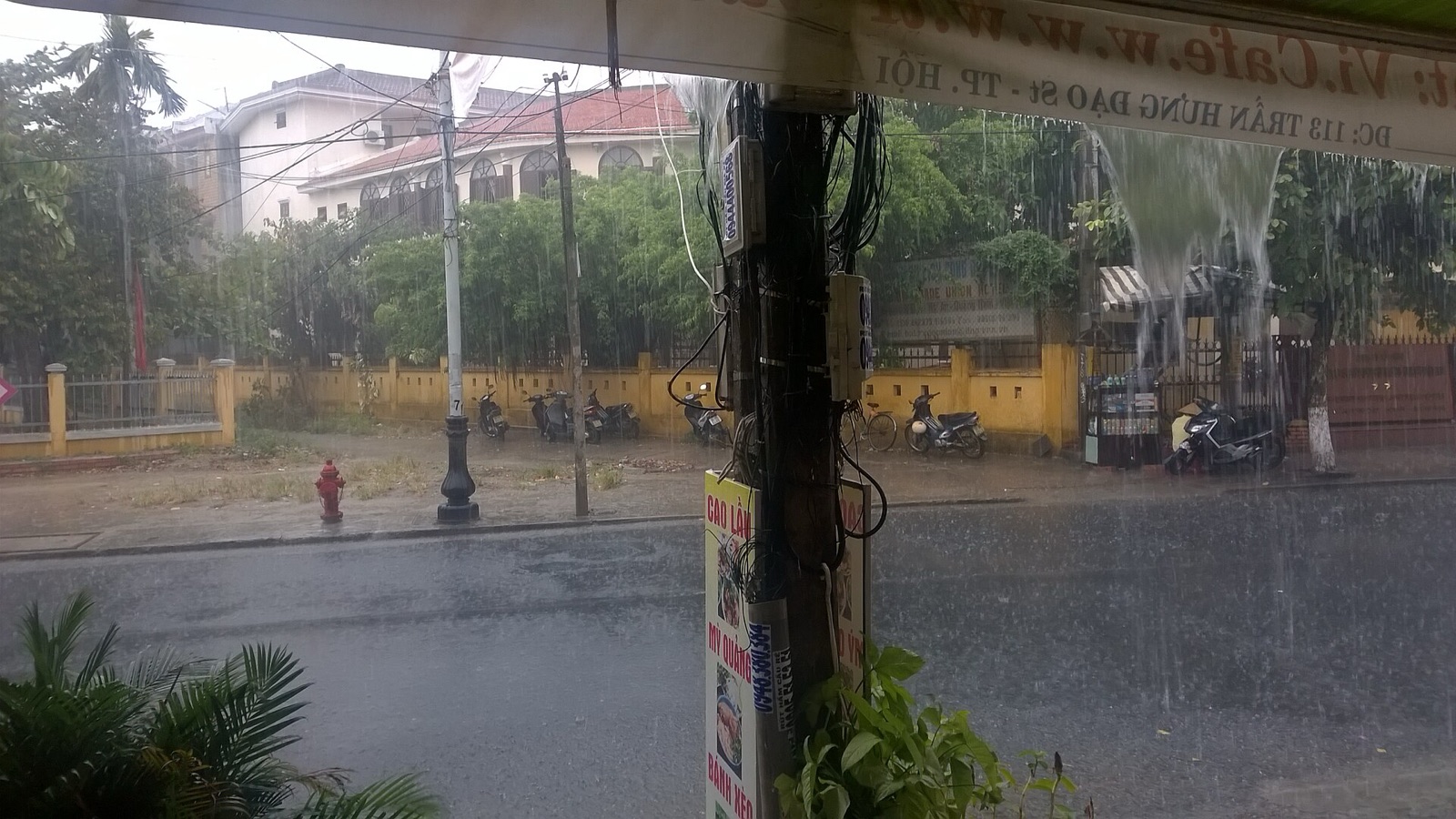
The central coast does not follow precisely the same weather pattern as the northern highlands or the south. Wetter periods and severe storms can affect Hoi An riverside lanes, roads, beaches and boat activities. For a fixed itinerary, check regional forecasts, local flood guidance and operator notices shortly before each excursion.
Use the actual arrival and departure points when comparing private cars, trains and flights. A headline travel time excludes traffic, transfer stops and waiting at hotels or stations. When weather is unsettled, prioritise safe transport and a flexible indoor alternative rather than forcing an exposed sightseeing circuit.
A route with useful breathing space
A practical first visit might use one base around Da Nang or Hoi An for heritage and coastal walks, then allow separate nights around Hue if imperial history is a priority. For cave country, plan another dedicated leg instead of assuming a return trip can be fitted between morning and evening activities.
Keep a short list of must-see experiences, one weather backup per base and realistic meal breaks. Confirm official admission arrangements locally, especially where multiple heritage sites have different access rules. A good regional plan should explain what you will leave out as clearly as what you include.
Six days, realistically paced
Flex days and transfers depend on current services, weather and individual mobility.
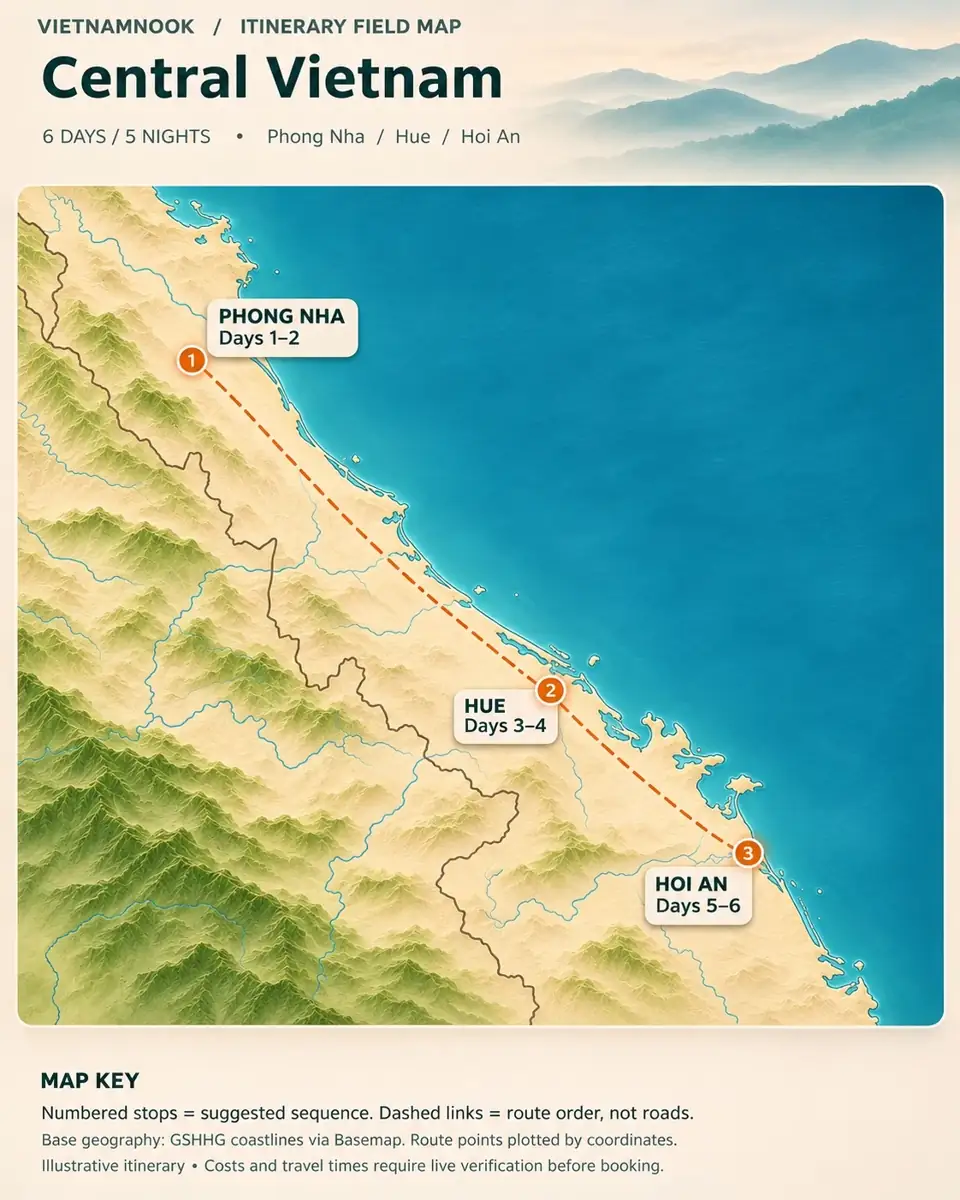
Arrive via Dong Hoi and settle in Phong Nha
Choose a flight or train to Dong Hoi if the current schedule suits the trip, then make the onward transfer to Phong Nha. The cave landscape is not simply another beach stop: karst geology, rivers and surrounding communities shape the region. Spend the first afternoon settling in, walking locally and asking your lodging which cave activities are operating. An early night gives you time to start the next day without rushing from one booking to another.
A deliberate day in the cave landscape
Choose a suitable guided cave visit or an established public tour based on stamina, seasonal access and weather. Confirm whether transport, helmets, lighting and any water activities are included. Some adventures require advance booking and genuine fitness; do not assume every attraction allows independent entry. Keep time for the quieter riverside village setting after the excursion. The second night in Phong Nha avoids an exhausted evening drive after a long day on uneven paths.
Travel south to Hue
Travel from Phong Nha or Dong Hoi toward Hue, allowing for the local transfer to the station if using rail. The train between Dong Hoi and Hue is a real segment to check against current Vietnam Railways schedules, not a guarantee of a particular departure. Hue's imperial-era landmarks reward an introduction at walking pace. Once settled, choose one area along the Perfume River for an evening stroll, with the following day reserved for the historic core.
Hue's imperial story
Give Hue's citadel and a carefully selected nearby historical site enough time to be understood rather than admired only from a bus window. Opening hours, ticket combinations and restoration access change, so verify them directly. Dress respectfully in religious spaces and consider shaded breaks in hot weather. A local food stop can frame the day as part of a living city, not only an imperial monument. This is the second Hue night; it makes an unhurried departure south possible.
Cross the Hai Van corridor and reach Hoi An
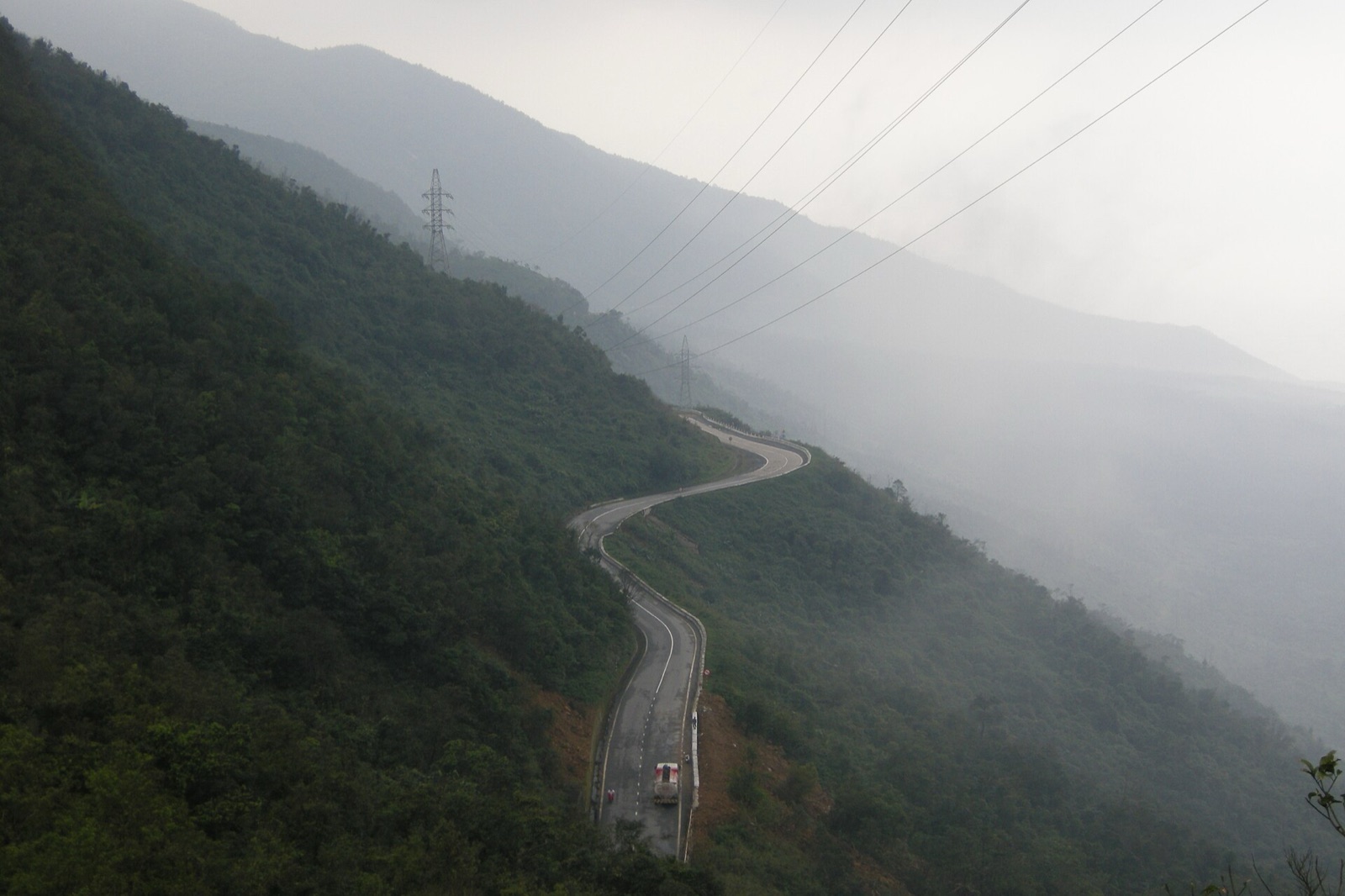
Travel from Hue toward Da Nang by confirmed rail or road, enjoying the coastal landscape where possible. A train to Da Nang does not carry you into Hoi An: book or arrange the separate onward road journey. The Hai Van Pass is a scenic corridor, not a promise that every vehicle takes the same road. Arrive in Hoi An in time to explore smaller streets before the evening crowds, and sleep in Hoi An for the fifth night. Photograph respectfully around homes and workshops.
Hoi An morning, then Da Nang departure
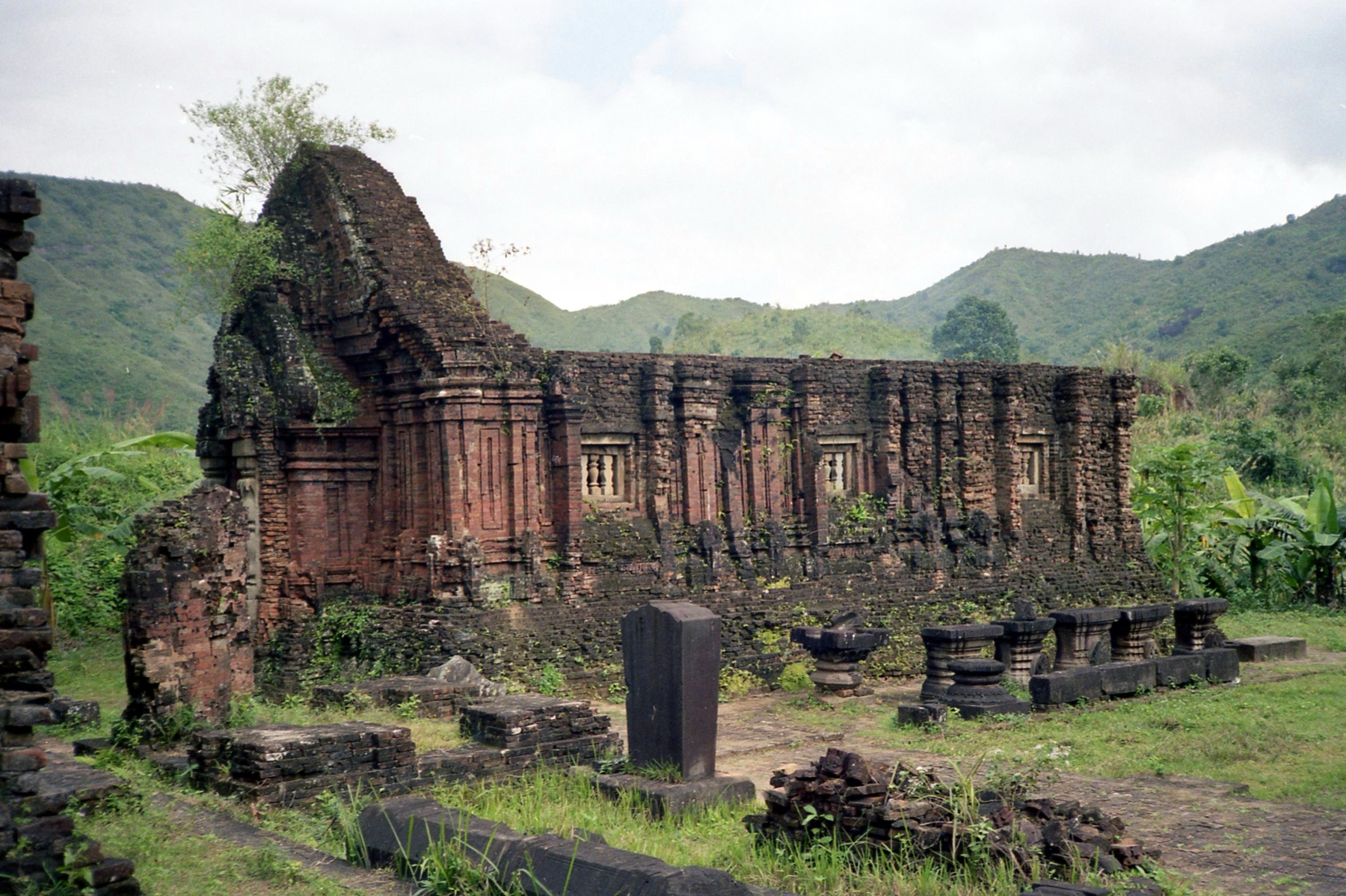
Use the morning to see the historic trading-town streets before the busiest hours, or choose an appropriately guided cultural activity. My Son is a separate archaeological excursion requiring its own transfer time; include it only if your departure schedule permits. Reach Da Nang airport or station with a generous buffer, particularly if the onward leg is international. A one-way arrival through Dong Hoi and departure through Da Nang can reduce backtracking but must be priced as an open-jaw itinerary.
Make the route your own
Choose between cave adventure and heritage depth
If rainfall limits cave access, spend additional time in Hue or Hoi An rather than forcing a physically unsuitable activity. Booking early helps for specialised tours, but also read refund and cancellation conditions. My Son is an optional heritage excursion from the Hoi An end of the trip, not a stop on the Phong Nha–Hue transfer; only add it if you have a free half-day.
Understand the rail connections
Dong Hoi–Hue and Hue–Da Nang are practical rail segments when the timetable works. Phong Nha and Hoi An each require a ground connection from the relevant station.
Why the fifth night matters
An Hoi An overnight allows a gentler evening after the coastal corridor. If your departing flight is very early, a Da Nang airport hotel might be a better last-night choice.
Indicative six-day costs
Estimated land-trip totals in millions of VND for six days and five nights. Planning estimates only—not live prices or bookable offers.
| Cost | Solo (1) | Couple (2) | Family (4) |
|---|---|---|---|
| Accommodation (5 nights) | 1.5–3 | 2.6–5.2 | 4.2–7.8 |
| Meals | 1–2 | 1.8–3.4 | 3.1–5.4 |
| Ground transfers | 1–2.2 | 1.7–3.4 | 2.3–4.7 |
| Admissions and activities | 1.1–2.3 | 1.9–4 | 3–5.2 |
| Contingency | 0.6–1.1 | 0.8–1.1 | 1–2 |
| Estimated total | 5.2–10.6 | 8.8–17.1 | 13.6–25.1 |
Flights additional: An open-jaw Hanoi–Dong Hoi / Da Nang–Hanoi flight pattern must be priced separately. Published one-way starting fares may not combine into the actual ticket price. Check Vietnam Airlines and Vietnam Railways for date-specific fares.
Family estimate assumes 2 adults and 2 children. Insurance, visas, international travel, premium excursions and shopping are excluded. Reconfirm availability, child rules and all transport prices.
Illustrated route overview
Common planning questions
Can I visit Hoi An and Hue in one day?
It is possible to travel between them, but a single day gives little time to understand both historic areas. Use separate visits or choose the heritage destination that best matches your interests.
Is every Phong Nha cave suitable for beginners?
No. Cave activities differ in access, terrain, length and equipment. Review the specific permitted route and operator requirements before booking.
What should I do if heavy rain affects my itinerary?
Follow local alerts and operator closures, avoid flooded roads or river activities, and use a flexible indoor plan or move the excursion to another day.
Sources
Destination research checked 9 November 2026. Verify current access, weather, transport and site restrictions independently.
Further reading
Related articles from our travel websites: